

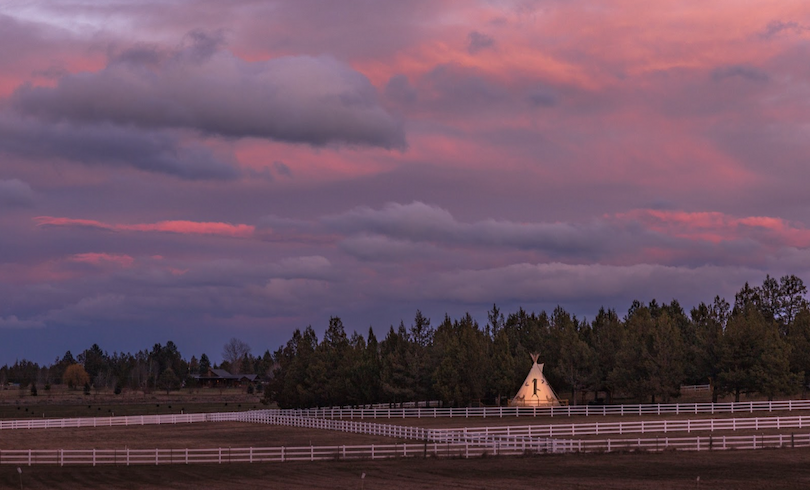
Tipi Calendar, October 2025 – Kris Lawler, Bend, OR
To purchase the calendar ($29), or if you have a stunning picture of your Nomadics tipi for this year’s calendar photo contest, please contact us at [email protected]

COMPANY NEWS
“An Indigenous Peoples’” Discount
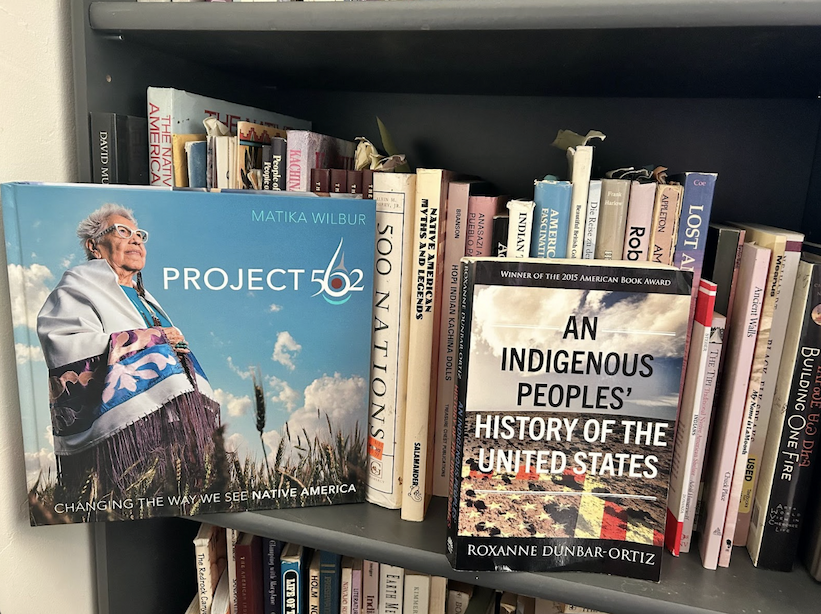
Indigenous Peoples’ Day is celebrated on Monday, October 13th. This day honors the histories, cultures, and perspectives of Indigenous peoples and their ancestors who lived on the land now known as North America. They existed in these areas for thousands of years before the first European explorers, such as Columbus, arrived. To learn more about their sophisticated cultures and societies, we invite you to ready Roxanne Dunbar-Ortiz’s book “ An Indigenous People’s History of the United States”, which is written from the perspective of Indigenous peoples. The book “Project 562“ is a tangible proof of the magnitude and depth of the Native cultures, showcasing 562 federally recognized tribes.
T]In September, we sent out a letter to many Native American tribes, organizations and individuals, offering every Native American one of our tipis at a 15% discount. Whether you are a proud Native American (who can claim the discount until Dec 1st) or you are holding the Native American tradition and connection to Nature close to your heart, please consider erecting a tipi on your land, as a symbol of the survival and perseverance of the First People.
ART DEPARTMENT
Sasquatch & Bigfoot Tipi Art
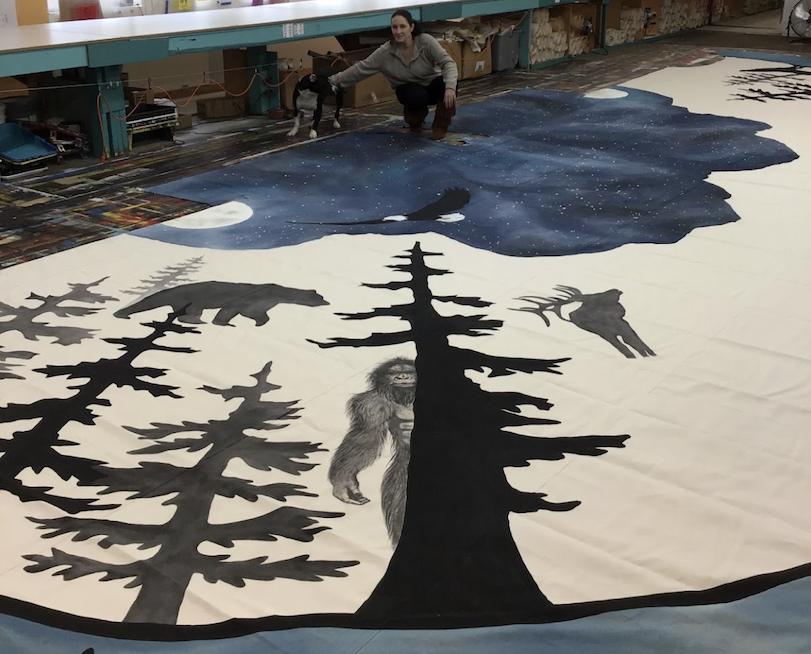
Oregon celebrated it’s 2nd annual Sasquatch Summer Fest with a 2-day Bigfoot madness festival in Oakridge, OR, this last July. Sasquatch, the gentle and protective giant of the woods, is acknowledged throughout the Pacific Northwest through festivals, seminars, museum exhibits – and tipi art. We have had the honor of painting Sasquatch on tipi covers and tipi liners, as silhouettes or life size art – with all the respect and reverence s/he deserves.

The exhibit Sensing Sasquatch of the High Desert Museum in Bend, OR explored Sasquatch’s past, present and future in the High Desert region through an Indigenous lens as Native peoples of the Plateau have long known about, encountered, depicted and told stories about Sasquatch.
WE CARE
Drum Tables by Jon James St. Andre
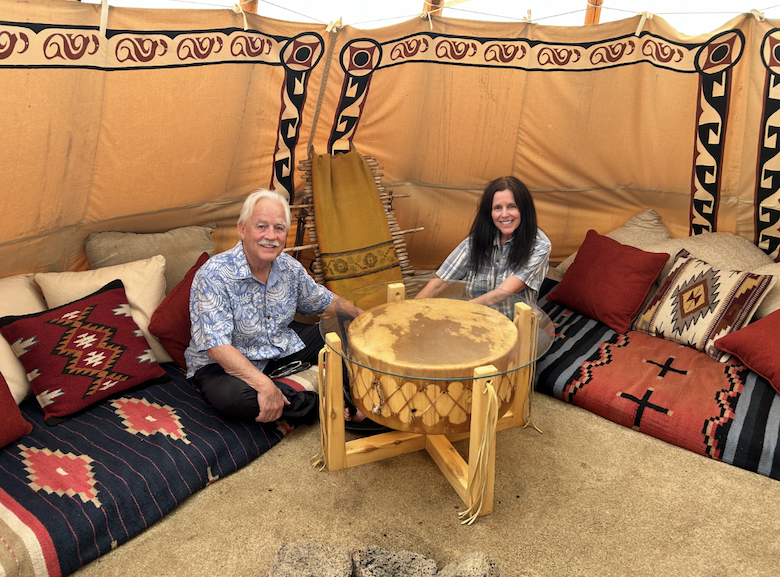
Jon St. Andre was an American ski jumper who competed in the 1960 Winter Olympics. He was born in Ishpeming, MI, but spent his last two decades near Spring Creek, CO, where he enjoyed creating Native American inspired drums, fished the mountain lakes and stoked his woodstove in his little cabin. Molly and Tom Bedell knew Jon as a gentle soul, a wonderful person who inspired peacefulness and a connection to the natural world. Jon passed in 2017 and left behind two beautifully crafted drum tables with Molly and Tom.
In search for a meaningful forever home for these two drum tables, Molly contacted us with the offer to donate them. We are gladly accepting this donation, and we will keep one of them in our tipi, but we are looking for an indigenous home for the second one.
Please contact us if you have a new owner in mind who would honor and cherish this well crafted piece of art. Please email [email protected]. Thank you.
TIPS & TRICKS
Take it down or not?
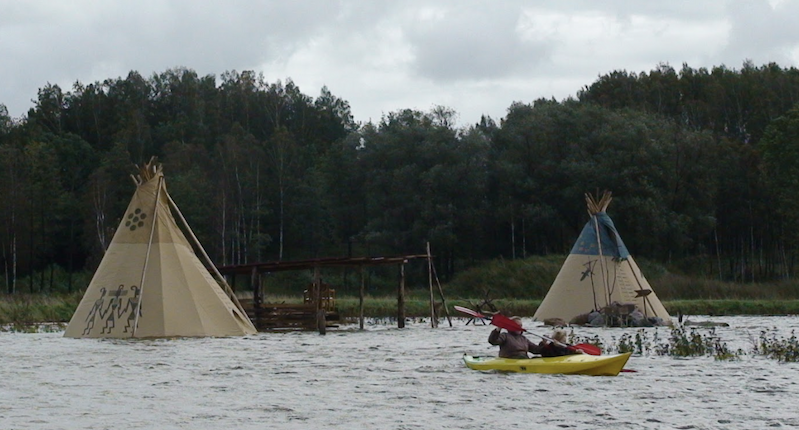
We often are asked if the tipi covers should be taken down in the winter. The answer is not a straight forward yes or no, as it depends on many factors. If you don’t use your tipi much and it will be sitting in rain and snow, and falling leaves will be piling up around it, your outer tipi cover will last longer if you take it down.
A wet, dark and cold winter – or wet snow piled up around the tipi – is hard on the canvas if you do not use your tipi during this time. If you use it often, you would shuffle the snow off the edge, you will make a fire in it and that will dry out the canvas and help prevent mold issues. But surging rivers, rain puddles, strong wind and falling branches, roaming animals with paws, claws, teeth or antlers can all compromise your canvas, specifically if you have chosen the cover out of the lighter weight 13oz cotton canvas.

